
Sunday, June 27th

ΠΡΟΓΡΑΜΜΑ ΙΕΡΩΝ ΑΚΟΛΟΥΘΙΩΝ ΙΟΥΝΙΟΥ 2021

ΟΡΘΡΟΣ & ΘΕΙΑ ΛΕΙΤΟΥΡΓΙΑ 9:00 π.μ.


Κυριακή, 6 ΙουνίουΣΤ΄ ΚΥΡΙΑΚΗ ΑΠΟ ΤΟΥ ΠΑΣΧΑ ( ΤΟΥ ΤΥΦΛΟΥ).

Κυριακή, 13 Ιουνίου: Ζ΄ ΚΥΡΙΑΚΗ ΑΠΟ ΤΟΥ ΠΑΣΧΑ (Ἐν ᾗ μνείαν ποιούμεθα τῆς ἐν Νικαίᾳ Α’ Οἰκουμενικῆς Συνόδου.)

Σαββάτο 19 Ιουνίου: Πρό τῆς Πεντηκοστῆς (Ψυχοσάββατον).

Κυριακή 20 Ιουνίου: Η΄ ΚΥΡΙΑΚΗ ΑΠΟ ΤΟΥ ΠΑΣΧΑ, ἐν ᾗ τήν Ἁγίαν ΠΕΝΤΗΚΟΣΤΗΝ ἑορτάζομεν.

Κυριακή 27 Ιουνίου: Α΄ ΜΑΤΘΑΙΟΥ (τῶν Ἁγίων Πάντων).


ΠΡΟΓΡΑΜΜΑ ΙΕΡΩΝ ΑΚΟΛΟΥΘΙΩΝ ΙΟΥΛΙΟΥ 2021

ΟΡΘΡΟΣ & ΘΕΙΑ ΛΕΙΤΟΥΡΓΙΑ 8:00 π.μ.


Κυριακή, 4 ΙουλίουΒ΄ ΚΥΡΙΑΚΗ ΜΑΤΘΑΙΟΥ.

Κυριακή, 11 Ιουλίου: Γ΄ ΚΥΡΙΑΚΗ ΜΑΤΘΑΙΟΥ.  ΤΗΣ ΑΓΙΑΣ ΜΕΓΑΛΟΜΑΡΤΥΡΟΣ ΕΥΦΗΜΙΑΣ.

Κυριακή 18 Ιουλίου: Τῶν 630 Ἁγίων καί Θεοφόρων Πατέρων τῆς Ἁγίας καί Οἰκουμενικῆς Δ’ Συνόδου, ἐν Χαλκηδόνι.

Κυριακή 25 Ιουλίου: Ε΄ ΚΥΡΙΑΚΗ ΜΑΤΘΑΙΟΥ. Ἡ Κοίμησις τῆς Ἁγίας Ἄννης, μητρός τῆς Ὑπεραγιας Θεοτόκου.

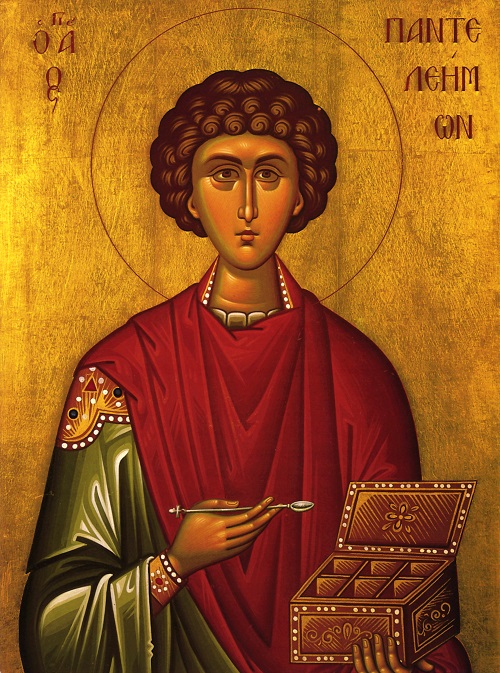
Δευτέρα 26 Ιουλίου: ΕΣΠΕΡΙΝΟΣ: Τοῦ Ἁγίου Μαγαλομάρτυρος καί ἰαματικοῦ Παντελεήμονος. (7:00 μ.μ.)

Τρίτη 27 Ιουλίου: Τοῦ Ἁγίου Μαγαλομάρτυρος καί ἰαματικοῦ Παντελεήμονος.


Μνημόσυνο

Την Κυριακή, 27 Ιουνίου 2021, θα τελεστούν τα ετήσια μνημόσυνα των αειμνήστων Αγορίτσας Παπαδοπούλου, Θεοδώρας Παπανικολάου & Μιχαήλ Γιούργκας.


 JUNE'S 2021 LITURGICAL PROGRAM

 ΟRTHROS & DIVINE LITURGY 9:00 a.m.


Sunday, July 6: SUNDAY OF THE BLIND MAN.

Sunday, June 13: SUNDAY OF HOLY FATHERS.

Saturday, June 19: SATURDAY OF SOULS.

Sunday, June 20: SUNDAY OF PENTECOST.

Sunday, June 27: ALL SAINTS DAY. 


JULY'S 2021 LITURGICAL PROGRAM

 ΟRTHROS & DIVINE LITURGY 8:00 a.m.


Sunday, July 4: 2nd SUNDAY OF MATTHEW.

Sunday, July 11: 3rd SUNDAY OF MATTHEW. EUPHEMIA THE GREAT.

Saturday, July 18: The Holy Fathers of the 4th Ecumenical Council.

Sunday, July 25: 5th SUNDAY OF MATTHEW. SAINT ANNA'S DORMITION.

Monday, July 26: Great Vespers: PANTELEIMON THE GREAT MARTYR. (at 7:00 p.m.)

Tuesday, July 27:  PANTELEIMON THE GREAT MARTYR.


Memorial Service

In remembrance of Agoritsas Papadopoulos, Theodoras Papanikolaou & Michael Giourgas we will hold the memorial service for them on Sunday, June 27, 2021.


 Παράκληση εις την Παναγία την Παυσολύπην | Προσευχή - Ορθόδοξο Προσευχητάρι

Η Παναγία η Παυσολύπη


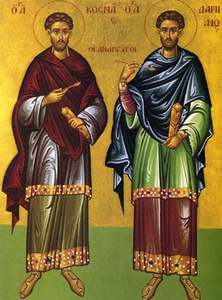
Οι άγιοι Ανάργυροι Κοσμάς και Δαμιανός « Ι. Ν. «ΜΕΓΑΛΗΣ» ΠΑΝΑΓΙΑΣ - ΑΓΙΟΥ  ΔΗΜΗΤΡΙΟΥ ΘΗΒΩΝ

Γίνεται γνωστό στους ευλαβείς χριστιανούς, πως η ενορία μας θα διαθέσει λωφορείο για τον Μέγα Πανηγυρικό Εσπερινό των Αγίων Αναργύρων, Μανχάταν. ( Θα κρατηθεί σειρά προτεραιότητας.)

ΩΡΑ ΑΝΑΧΩΡΗΣΗΣ: 5:30 μ.μ. έμπροσθεν του Ιερού Ναού. 


Ο Άγιος Παντελεήμων και η πνευματική μας υγεία | ΠεμπτουσίαΝΥΧΘΗΜΕΡΟΝ: Ο Αρχιγραμματέας της Επαρχιακής Συνόδου Αμερικής Αρχιμ.  Αθηναγόρας εκλέχτηκε Επίσκοπος Ναζιανζού


Μὲ ἰδιαίτερη χαρά, ἡ Κοινότητά μας καλεῖ τὸ εὐσεβὲς χριστεπώνυμο πλήρωμα στὴν ἐτήσια πανήγυρι γιὰ τὸν ἑορτασμὸ τῆς μνήμης τοῦ Ἁγίου Παντελεήμονος τοῦ Μεγαλομάρτυρος καὶ Ἰαματικοῦ.

Δευτέρα 26 Ιουλίου 2021, 7:00 μ.μ.
Μέγας Ἀρχιερατικὸς Ἑσπερινὸς Χοροστατοῦντος τοῦ Θεοφιλεστάτου Ἐπισκόπου Ναζιανζού κ. Αθηναγόρα.

Τρίτη 27 Ιουλίου 2021, 8:00 π.μ.
Ὄρθρος καὶ Θεία Λειτουργία Ἱερουργοῦντος τοῦ Θεοφιλεστάτου Ἐπισκόπου Ναζιανζού κ. Αθηναγόρα.


Μέσω του παρακάτω λογαριασμού PayPal που δημιουργήθηκε, μπορείτε να στηρίξετε τις ανάγκες της ενορίας: https://www.paypal.me/SsConstantinenHelen?locale.x=en_US 


You can always support and contribute to the needs of our church by following the PayPal account link: https://www.paypal.me/SsConstantinenHelen?locale.x=en_US


Κατηχητικό Σχολείο» το 2016; Ναι!!! Αναγκαίο όσο ποτέ άλλοτε - ΒΗΜΑ  ΟΡΘΟΔΟΞΙΑΣ 
 
ΞΕΚΙΝΗΣΑΝ ΟΙ ΕΓΓΡΑΦΕΣ!


 Δυνητικά κακός για την υγεία ο ελληνικός καφές: Τι έδειξε έρευνα για το  φιλτράρισμα του καφέ - Iatropedia

Μετά την Θεία Λειτουργία σας περιμένουμε στην αίθουσα εκδηλώσεων για να πιούμε τον καφέ μας και να συνομιλήσουμε. 


Gospel and Epistle Readings

Matins Gospel Reading

First Orthros Gospel
Κατὰ Ματθαῖον 28:16-20

Οἱ δὲ ἕνδεκα μαθηταὶ ἐπορεύθησαν εἰς τὴν Γαλιλαίαν, εἰς τὸ ὄρος οὗ ἐτάξατο αὐτοῖς ὁ ᾿Ιησοῦς. καὶ ἰδόντες αὐτὸν προσεκύνησαν αὐτῷ, οἱ δὲ ἐδίστασαν. καὶ προσελθὼν ὁ ᾿Ιησοῦς ἐλάλησεν αὐτοῖς λέγων· ἐδόθη μοι πᾶσα ἐξουσία ἐν οὐρανῷ καὶ ἐπὶ γῆς. πορευθέντες μαθητεύσατε πάντα τὰ ἔθνη, βαπτίζοντες αὐτοὺς εἰς τὸ ὄνομα τοῦ Πατρὸς καὶ τοῦ Υἱοῦ καὶ τοῦ ῾Αγίου Πνεύματος, διδάσκοντες αὐτοὺς τηρεῖν πάντα ὅσα ἐνετειλάμην ὑμῖν· καὶ ἰδοὺ ἐγὼ μεθ᾿ ὑμῶν εἰμι πάσας τὰς ἡμέρας ἕως τῆς συντελείας τοῦ αἰῶνος. ἀμήν.


First Orthros Gospel
The Reading is from Matthew 28:16-20

At that time, the eleven disciples went to Galilee, to the mountain to which Jesus had directed them. And when they saw him they worshipped him; but some doubted. And Jesus came and said to them, "All authority in heaven and on earth has been given to me. Go therefore and make disciples of all nations, baptizing them in the name of the Father and of the Son and of the Holy Spirit, teaching them to observe all that I have commanded you; and lo, I am with you always, to the close of the age. Amen."


Epistle Reading


Προκείμενον. Fourth Mode. ΨΑΛΜΟΙ 67.35,26.
Θαυμαστὸς ὁ Θεὸς ἐν τοῖς Ἁγίοις αὐτοῦ.
Στίχ. Ἐν Ἐκκλησίαις εὐλογεῖτε τὸν Θεὸν.


τὸ Ἀνάγνωσμα Πρὸς Ἑβραίους 11:33-40, 12:1-2.

Ἀδελφοί, οἱ Ἅγιοι πάντες διὰ πίστεως κατηγωνίσαντο βασιλείας, εἰργάσαντο δικαιοσύνην, ἐπέτυχον ἐπαγγελιῶν, ἔφραξαν στόματα λεόντων, ἔσβεσαν δύναμιν πυρός, ἔφυγον στόματα μαχαίρας, ἐνεδυναμώθησαν ἀπὸ ἀσθενείας, ἐγενήθησαν ἰσχυροὶ ἐν πολέμῳ, παρεμβολὰς ἔκλιναν ἀλλοτρίων. Ἔλαβον γυναῖκες ἐξ ἀναστάσεως τοὺς νεκροὺς αὐτῶν· ἄλλοι δὲ ἐτυμπανίσθησαν, οὐ προσδεξάμενοι τὴν ἀπολύτρωσιν, ἵνα κρείττονος ἀναστάσεως τύχωσιν· ἕτεροι δὲ ἐμπαιγμῶν καὶ μαστίγων πεῖραν ἔλαβον, ἔτι δὲ δεσμῶν καὶ φυλακῆς· ἐλιθάσθησαν, ἐπρίσθησαν, ἐπειράσθησαν, ἐν φόνῳ μαχαίρας ἀπέθανον· περιῆλθον ἐν μηλωταῖς, ἐν αἰγείοις δέρμασιν, ὑστερούμενοι, θλιβόμενοι, κακουχούμενοι - ὧν οὐκ ἦν ἄξιος ὁ κόσμος - ἐν ἐρημίαις πλανώμενοι καὶ ὄρεσιν καὶ σπηλαίοις καὶ ταῖς ὀπαῖς τῆς γῆς. Καὶ οὗτοι πάντες, μαρτυρηθέντες διὰ τῆς πίστεως, οὐκ ἐκομίσαντο τὴν ἐπαγγελίαν, τοῦ θεοῦ περὶ ἡμῶν κρεῖττόν τι προβλεψαμένου, ἵνα μὴ χωρὶς ἡμῶν τελειωθῶσιν. Τοιγαροῦν καὶ ἡμεῖς, τοσοῦτον ἔχοντες περικείμενον ἡμῖν νέφος μαρτύρων, ὄγκον ἀποθέμενοι πάντα καὶ τὴν εὐπερίστατον ἁμαρτίαν, διʼ ὑπομονῆς τρέχωμεν τὸν προκείμενον ἡμῖν ἀγῶνα, ἀφορῶντες εἰς τὸν τῆς πίστεως ἀρχηγὸν καὶ τελειωτὴν Ἰησοῦν.


Prokeimenon. Fourth Mode. Psalm 67.35,26.
God is wonderful among his saints.
Verse: Bless God in the congregations.


The reading is from St. Paul's Letter to the Hebrews 11:33-40; 12:1-2.

Brethren, all the saints through faith conquered kingdoms, enforced justice, received promises, stopped the mouths of lions, quenched raging fire, escaped the edge of the sword, won strength out of weakness, became mighty in war, put foreign armies to flight. Women received their dead by resurrection. Some were tortured, refusing to accept release, that they might rise again to a better life. Others suffered mocking and scourging, and even chains and imprisonment. They were stoned, they were sawn in two, they were tempted, they were killed with the sword; they went about in skins of sheep and goats, destitute, afflicted, ill-treated - of whom the world was not worthy - wandering over deserts and mountains and in dens and caves of the earth. And all these, though well attested by their faith, did not receive what was promised, since God had foreseen something better for us, that apart from us they should not be made perfect. Therefore, since we are surrounded by so great a cloud of witnesses, let us also lay aside every weight, and sin which clings so closely, and let us run with perseverance the race that is set before us, looking to Jesus the pioneer and perfecter of our faith.


Gospel Reading


The Sunday of All Saints
Κατὰ Ματθαῖον 10:32-33, 37-38, 19:27-30

Εἶπεν ὁ Κὐριος τοῖς ἑαυτοῦ μαθηταῖς· Πᾶς οὖν ὅστις ὁμολογήσει ἐν ἐμοὶ ἔμπροσθεν τῶν ἀνθρώπων, ὁμολογήσω κἀγὼ ἐν αὐτῷ ἔμπροσθεν τοῦ πατρός μου τοῦ ἐν οὐρανοῖς. ὅστις δ᾿ ἂν ἀρνήσηταί με ἔμπροσθεν τῶν ἀνθρώπων, ἀρνήσομαι αὐτὸν κἀγὼ ἔμπροσθεν τοῦ πατρός μου τοῦ ἐν οὐρανοῖς. ῾Ο φιλῶν πατέρα ἢ μητέρα ὑπὲρ ἐμὲ οὐκ ἔστι μου ἄξιος· καὶ ὁ φιλῶν υἱὸν ἢ θυγατέρα ὑπὲρ ἐμὲ οὐκ ἔστι μου ἄξιος· καὶ ὃς οὐ λαμβάνει τὸν σταυρὸν αὐτοῦ καὶ ἀκολουθεῖ ὀπίσω μου, οὐκ ἔστι μου ἄξιος. Τότε ἀποκριθεὶς ὁ Πέτρος εἶπεν αὐτῷ· ἰδοὺ ἡμεῖς ἀφήκαμεν πάντα καὶ ἠκολουθήσαμέν σοι· τί ἄρα ἔσται ἡμῖν; ὁ δὲ ᾿Ιησοῦς εἶπεν αὐτοῖς· ἀμὴν λέγω ὑμῖν ὅτι ὑμεῖς οἱ ἀκολουθήσαντές μοι, ἐν τῇ παλιγγενεσίᾳ, ὅταν καθίσῃ ὁ υἱὸς τοῦ ἀνθρώπου ἐπὶ θρόνου δόξης αὐτοῦ, καθίσεσθε καὶ ὑμεῖς ἐπὶ δώδεκα θρόνους κρίνοντες τὰς δώδεκα φυλὰς τοῦ ᾿Ισραήλ. καὶ πᾶς ὃς ἀφῆκεν οἰκίας ἢ ἀδελφοὺς ἢ ἀδελφὰς ἢ πατέρα ἢ μητέρα ἢ γυναῖκα ἢ τέκνα ἢ ἀγροὺς ἕνεκεν τοῦ ὀνόματός μου, ἑκατονταπλασίονα λήψεται καὶ ζωὴν αἰώνιον κληρονομήσει. Πολλοὶ δὲ ἔσονται πρῶτοι ἔσχατοι καὶ ἔσχατοι πρῶτοι.


The Sunday of All Saints
The Reading is from Matthew 10:32-33; 37-38; 19:27-30

The Lord said to his disciples, "Every one who acknowledges me before men, I also will acknowledge before my Father who is in heaven; but whoever denies me before men, I also will deny him before my Father who is in heaven. He who loves father or mother more than me is not worthy of me; and he who loves son or daughter more than me is not worthy of me; and he who does not take his cross and follow me is not worthy of me." Then Peter said in reply, "Lo, we have left everything and followed you. What then shall we have?" Jesus said to them, "Truly, I say to you, in the new world, when the Son of man shall sit on his glorious throne, you who have followed me will also sit on twelve thrones, judging the twelve tribes of Israel. And every one who has left houses or brothers or sisters or father or mother or children or lands, for my name's sake, will receive a hundredfold, and inherit eternal life. But many that are first will be last, and the last first."


Hymns of the Day

Resurrectional Apolytikion in the Plagal Fourth Mode

O Merciful One, You came from on high, and condescended to Your three day burial to save us from suffering. You are our Life and our Resurrection. Glory to You.
Ἐξ ὕψους κατῆλθες ὁ εὔσπλαγχνος, ταφὴν καταδέξω τριήμερον, ἵνα ἡμᾶς ἐλευθερώσῃς τῶν παθῶν. Ἡ ζωὴ καὶ ἡ Ἀνάστασις ἡμῶν, Κύριε δόξα σοι.
 

Apolytikion for All Saints in the Fourth Mode

Your Church, O Christ our God, clothed itself in the blood of Your martyrs from throughout the world, as though it were a robe of linen and purple; through them, she cries out to You, "Send down upon Your people compassion, grant peace to Your commonwealth, and to our souls, great mercy."
Τῶν ἐν ὅλῳ τῷ κόσμῳ Μαρτύρων σου, ὡς πορφύραν καὶ βύσσον τὰ αἵματα, ἡ Ἐκκλησία σου στολισαμένη, δι' αὐτῶν βοᾷ σοι· Χριστὲ ὁ Θεός, τῷ λαῷ σου τοὺς οἰκτιρμούς σου κατάπεμψον, εἰρήνην τῇ πολιτείᾳ σου δώρησαι, καὶ ταῖς ψυχαῖς ἡμῶν τὸ μέγα ἔλεος.
 

Apolytikion for the Church in the Plagal Fourth Mode

Τοῦ Σταυροῦ σου τὸν τύπον ἐν οὐρανῷ θεασάμενος, καὶ ὡς ὁ Παῦλος τὴν κλῆσιν οὐκ ἐξ ἀνθρώπων δεξάμενος, ὁ ἐν βασιλεῦσιν, Ἀπόστολός σου Κύριε, Βασιλεύουσαν πόλιν τῇ χειρὶ σου παρέθετο· ἣν περίσωζε διὰ παντὸς ἐν εἰρήνη, πρεσβείαις τῆς Θεοτόκου, μόνε Φιλάνθρωπε.

He beheld the image of Your Cross in the Heavens and, as Paul, he too did not receive the call from men. Your Apostle among Kings placed the care of the Royal City in Your hands. Through the intercessions of the Theotokos, only Loving Lord, keep it ever in peace.

Seasonal Kontakion in the Plagal Fourth Mode

The world offers You, the author of all creation, as the first-fruits of nature, the God-bearing martyrs. O most merciful, by their intercessions, through the Theotokos, maintain Your Church in perfect peace.
Ὡς ἀπαρχὰς τῆς φύσεως, τῷ φυτουργῷ τῆς κτίσεως, ἡ οἰκουμένη προσφέρει σοι Κύριε, τοὺς θεοφόρους Μάρτυρας, ταῖς αὐτῶν ἱκεσίαις, ἐν εἰρήνῃ βαθείᾳ, τὴν Ἐκκλησίαν σου, διὰ τῆς Θεοτόκου συντήρησον, πολυέλεε.


Saints and Feasts


Allsaint

June 27

The Sunday of All Saints


Honouring the friends of God with much reverence, the Prophet-King David says, "But to me, exceedingly honourable are Thy friends, O Lord" (Ps. 138:16). And the divine Apostle, recounting the achievements of the Saints, and setting forth their memorial as an example that we might turn away from earthly things and from sin, and emulate their patience and courage in the struggles for virtue, says, "Wherefore seeing we also are compassed about with so great a cloud of witnesses, let us lay aside every burden, and the sin which doth so easily beset us, and let us run with patience the race that is set before us" (Heb. 12:1).

This commemoration began as the Sunday (Synaxis) of All Martyrs; to them were added all the ranks of Saints who bore witness (the meaning of "Martyr" in Greek) to Christ in manifold ways, even if occasion did not require the shedding of their blood.

Therefore, guided by the teaching of the Divine Scriptures and Apostolic Tradition, we the pious honour all the Saints, the friends of God, for they are keepers of God's commandments, shining examples of virtue, and benefactors of mankind. Of course, we honour the known Saints especially on their own day of the year, as is evident in the Menologion. But since many Saints are unknown, and their number has increased with time, and will continue to increase until the end of time, the Church has appointed that once a year a common commemoration be made of all the Saints. This is the feast that we celebrate today. It is the harvest of the coming of the Holy Spirit into the world; it is the "much fruit" brought forth by that "Grain of wheat that fell into the earth and died" (John 12:24); it is the glorification of the Saints as "the foundation of the Church, the perfection of the Gospel, they who fulfilled in deed the sayings of the Saviour" (Sunday of All Saints, Doxasticon of Vespers).

In this celebration, then, we reverently honour and call blessed all the Righteous, the Prophets, Apostles, Martyrs, Confessors, Shepherds, Teachers, and Holy Monastics, both men and women alike, known and unknown, who have been added to the choirs of the Saints and shall be added, from the time of Adam until the end of the world, who have been perfected in piety and have glorified God by their holy lives. All these, as well as the orders of the Angels, and especially our most holy Lady and Queen, the Ever-virgin Theotokos Mary, do we honour today, setting their life before us as an example of virtue, and entreating them to intercede in our behalf with God, Whose grace and boundless mercy be with us all. Amen.
Allsaint

June 27

Samson the Hospitable

Saint Samson was from Rome and flourished during the reign of Saint Justinian the Great. Being a physician, he came to Constantinople, where he so distinguished himself for his virtue and his love for the sick and the poor that Patriarch Menas ordained him priest. The Emperor Justinian was healed by him, and out of gratitude built him a large hospital, which was afterwards known as "The Hospice of Samson." Saint Samson is one of the Holy Unmercenaries.


Allsaint

June 27

Joanna the Myrrhbearer


29_petepaul

June 29

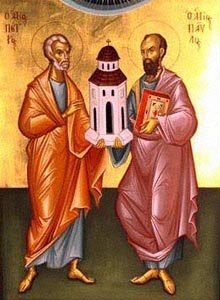
Peter and Paul, the Holy Apostles

The divinely-blessed Peter was from Bethsaida of Galilee. He was the son of Jonas and the brother of Andrew the First-called. He was a fisherman by trade, unlearned and poor, and was called Simon; later he was renamed Peter by the Lord Jesus Christ Himself, Who looked at him and said, "Thou art Simon the son of Jonas; thou shalt be called Cephas (which is by interpretation, Peter)" (John 1:42). On being raised by the Lord to the dignity of an Apostle and becoming inseparable from Him as His zealous disciple, he followed Him from the beginning of His preaching of salvation up until the very Passion, when, in the court of Caiaphas the high priest, he denied Him thrice because of his fear of the Jews and of the danger at hand. But again, after many bitter tears, he received complete forgiveness of his transgression. After the Resurrection of Christ and the descent of the Holy Spirit, he preached in Judea, Antioch, and certain parts of Asia, and finally came to Rome, where he was crucified upside down by Nero, and thus he ascended to the eternal habitations about the year 66 or 68, leaving two Catholic (General) Epistles to the Church of Christ.

Paul, the chosen vessel of Christ, the glory of the Church, the Apostle of the Nations and teacher of the whole world, was a Jew by race, of the tribe of Benjamin, having Tarsus as his homeland. He was a Roman citizen, fluent in the Greek language, an expert in knowledge of the Law, a Pharisee, born of a Pharisee, and a disciple of Gamaliel, a Pharisee and notable teacher of the Law in Jerusalem. For this cause, from the beginning, Paul was a most fervent zealot for the traditions of the Jews and a great persecutor of the Church of Christ; at that time, his name was Saul (Acts 22:3-4). In his great passion of rage and fury against the disciples of the Lord, he went to Damascus bearing letters of introduction from the high priest. His intention was to bring the disciples of Christ back to Jerusalem in bonds. As he was approaching Damascus, about midday there suddenly shone upon him a light from Heaven. Falling on the earth, he heard a voice saying to him, "Saul, Saul, why persecutest thou Me?" And he asked, "Who art Thou, Lord?" And the Lord said, "I am Jesus Whom thou persecutest; it is hard for thee to kick against the pricks." And that heavenly voice and brilliance made him tremble, and he was blinded for a time. He was led by the hand into the city, and on account of a divine revelation to the Apostle Ananias (see Oct. 1), he was baptized by him, and both his bodily and spiritual eyes were opened to the knowledge of the Sun of Righteousness. And straightway- O wondrous transformation! - beyond all expectation, he spoke with boldness in the synagogues, proclaiming that "Christ is the Son of God" (Acts 9:1-21). As for his zeal in preaching the Gospel after these things had come to pass, as for his unabating labors and afflictions of diverse kinds, the wounds, the prisons, the bonds, the beatings, the stonings, the shipwrecks, the journeys, the perils on land, on sea, in cities, in wildernesses, the continual vigils, the daily fasting, the hunger, the thirst, the nakedness, and all those other things that he endured for the Name of Christ, and which he underwent before nations and kings and the Israelites, and above all, his care for all the churches, his fiery longing for the salvation of all, whereby he became all things to all men, that he might save them all if possible, and because of which, with his heart aflame, he continuously traveled throughout all parts, visiting them all, and like a bird of heaven flying from Asia and Europe, the West and East, neither staying nor abiding in any one place - all these things are related incident by incident in the Book of the Acts, and as he himself tells them in his Epistles. His Epistles, being fourteen in number, are explained in 250 homilies by the divine Chrysostom and make manifest the loftiness of his thoughts, the abundance of the revelations made to him, the wisdom given to him from God, wherewith he brings together in a wondrous manner the Old with the New Testaments, and expounds the mysteries thereof which had been concealed under types; he confirms the doctrines of the Faith, expounds the ethical teaching of the Gospel, and demonstrates with exactness the duties incumbent upon every rank, age, and order of man. In all these things his teaching proved to be a spiritual trumpet, and his speech was seen to be more radiant than the sun, and by these means he clearly sounded forth the word of truth and illumined the ends of the world. Having completed the work of his ministry, he likewise ended his life in martyrdom when he was beheaded in Rome during the reign of Nero, at the same time, some say, when Peter was crucified.


30_12apost

June 30

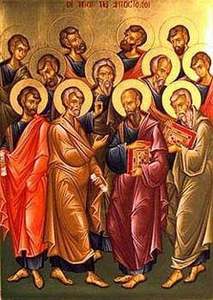
Synaxis of the Twelve Holy Apostles

The names of the Twelve Apostles are these: Simon, who was called Peter, and his brother Andrew, the First-called; James the son of Zebedee, and his brother John, who was also the Evangelist and Theologian; Philip, and Bartholomew (see also June 11); Thomas, and Matthew the publican, who was also called Levi and was an Evangelist; James the son of Alphaeus, and Jude (also called Lebbaeus, and surnamed Thaddaeus), the brother of James, the Brother of God; Simon the Cananite ("the Zealot"), and Matthias, who was elected to fill the place of Judas the traitor (see Aug. 9).


Kosmdami

July 01

Cosmas & Damian the Holy Unmercenaries

These Saints, who are different from those that are celebrated on the 1st of November, were from Rome. They were physicians, freely bestowing healing upon beasts and men, asking nothing from the healed other than that they confess and believe in Christ. They ended their life in martyrdom in the year 284, under the Emperors Carinus and Numerian.


Allsaint

July 03

Anatolius, Patriarch of Constantinople

Saint Anatolius was a priest from Alexandria, who had been ordained deacon and perhaps also priest by Saint Cyril, Archbishop of Alexandria. In 449, at the Robber Council of Ephesus, Saint Cyril's infamous successor, the violent Dioscorus, unlawfully deposed Flavian, the Patriarch of Constantinople and opponent of the Monophysite Eutyches; Flavian, from the beatings which he received, died soon after. Dioscorus, thinking that the priest Anatolius would support him, consecrated him Patriarch of Constantinople in Saint Flavian's stead. After he had been consecrated by Dioscorus-who at that time had not yet been deposed-Anatolius united with the Orthodox; before the Council of Chalcedon in 451, he held a council of the Bishops in Constantinople, at which the Orthodox "Tome" of Pope Leo (see Feb. 18), which Dioscorus had not allowed to be read at the Robber Council, was read and approved; and at the Council of Chalcedon in 451, he condemned Nestorius, Eutyches, and, for his unlawful actions, Dioscorus. Saint Anatolius reposed in the year 458. Some ascribe to this Anatolius the hymns of Vespers and the Praises in the Octoechos that are labeled Anatolian Stichera; but others (which may be more correct), to another with the same name, who was from the Monastery of Studium, and a disciple of Saint Theodore the Studite, whose epistle to this Anatolius is still extant.


Wisdom of the Fathers

Peter ... put to Him this question in behalf of all the world ... For He had required of the rich man these two things, to give that he had to the poor, and to follow Him. ... For the forsaking was done for the sake of following, and the following was rendered easier by the forsaking.
 
St. John Chrysostom
Homily 64 on Matthew 19, 4th Century

But He seems to me here to intimate also the persecutions. For since there were many instances both of fathers urging their sons to ungodliness, and wives their husbands; when they command these things, said He, let them be neither wives nor parents, even as Paul likewise said, "But if the unbelieving depart, let him depart."
 
St. John Chrysostom
Homily 64 on Matthew 19, 4th Century